

12 Garden Path Ideas to Consider For Your Custom Home Landscaping
May 26, 2026When you’re designing and building a custom home, most of your focus will be on the home design, but you don’t want to forget about what you want the rest of your lot to look like, especially if you will be wanting backyard structures or are navigating a sloped lot. Gardens and the landscaping around them can elevate your yard and the overall curb appeal of your home. Here are some garden path ideas to consider for your custom home landscaping:
- Pick a walkway material that complements the aesthetic you want.
- Consider a different kind of garden path.
- Use garden paths to define borders.
- Soften path borders with flowers.
- Surround a path with shells, gravel, or sand for a coastal look.
- Create whimsy with winding paths.
- Use stepping stones and grass for a casual look.
- Create a design.
- Use steps or terraces for multiple levels.
- Make sure drainage is sufficient.
- Include lights along the garden path.
- Use garden paths and walkways to connect outdoor living spaces.
1. Pick a Walkway Material That Complements the Aesthetic You Want
There are several walkway options and materials that will work well for a garden path. A material and style that complements the aesthetic you want for your home will enhance the overall look and feel of your garden, while still providing the functional path you want.
Pavers tend to be a popular garden path option. They are available in a variety of materials, including concrete, brick, and natural stone. They can also be cut into various shapes and styles to create the look you want. Whether you want a more modern and clean look and feel or something more country and rustic, there are paver options to help you create a garden path that complements your chosen aesthetic.
2. Consider a Different Kind of Garden Path
A garden path doesn’t necessarily have to be a stone walkway. Bamboo slats, wooden boards, or vinyl planks manufactured to look like wood can be used to create a wooden walkway or a boardwalk look and feel. You can also use colorful tiles and stones to create artistic pathways with a mosaic look. This is a hardscaping trend in landscaping that can add a unique element and elevate your landscaping.
There are also “softer” materials and types of paths that tend to have a bit more “give” when you walk on them, if you don’t necessarily want a solid, hard surface for a garden path. Grass between structured garden beds can create pathways. You can also use layers of gravel, small stones, shells, or even sand to create pathways. Shells are a popular option for coastal home decor and nautical styles, and crushed shells can be used as garden paths.
3. Use Garden Paths to Define Borders
A tip and an idea for garden paths is to use them to define borders around your home and in your landscaping. Garden fences are useful for defining borders around specific elements, and garden paths can be used to define borders and spaces around and in between them.
If you have several garden beds and different backyard structures, you can use garden paths to define borders between them and also help manage foot traffic and the flow of people as they navigate your yard.
4. Soften Path Borders With Flowers
Space for a garden, the right walkways, and comfortable, relaxing areas are backyard must-haves. Whether creating a solid surface walkway or layering a loose material to create a garden path, your garden path will have defined borders.
Depending on the material, how it is implemented, and what else is around it, a garden path can have harsh edges. Clear, defined edges can work well in a variety of styles. However, if you want a softer transition between path edges and surrounding elements, you can soften path borders and edges with flowers or other plants. This is a garden path idea that can work really well for blending and transitioning from garden paths to raised garden beds.
5. Surround a Path With Shells, Gravel, or Sand For a Coastal Look
Surrounding a path with flowers or other plants can help soften edges, but you can use other materials to complement the look and feel you want to create. Even if you are using a different material for the path itself, you can define borders and soften edges by surrounding a path with other materials.
Wood chips can be a popular option. Crushed shells, gravel, or sand are options for a coastal look and feel. You can pair these with iridescent tile accents to give that shimmering, reflective water and go all in on creating a coastal atmosphere.
6. Create Whimsy With Winding Paths
Winding garden paths are useful for defining borders around differently-shaped areas. They can also be used to create whimsy or complement a fantasy or storybook look. Elements like fairy gardens and decorated gazebos, paired with gently curving, winding garden paths, can make it feel like you are entering a fantasy realm in your backyard.
Going with a fully-furnished look and turning it into a relaxing retreat in your own backyard are popular gazebo ideas that can work well with this approach. There is also a lot of flexibility within this idea. Depending on what elements you add, how many, and how they are incorporated into your landscaping, you can range from an artistic pathway and a light touch of whimsy to an immersive, fantastical experience in your backyard.
7. Use Stepping Stones and Grass For a Casual Look
Stepping stones are a classic garden path idea. For a more casual garden look and feel, stepping stones or flagstone surrounded by grass work well. If you don’t want to have to keep up with maintaining the grass around stones, but still want a stepping-stone garden path, you can surround stones with pea gravel, soil, sand, or crushed shells.
8. Create a Design
Mosaic-style walkways are an option to incorporate design and create a more artistic garden path. You can also create a specific design with your pathway or include designs in it. This is a popular garden trend that allows people to add a creative twist to their landscaping.
Stamped concrete can be manufactured to include specific designs. Stepping stones can also be imprinted or carved to feature a design. They can even be cut into different shapes! You can also use plants and other materials in addition to your walkway material to create interesting shapes and designs as garden path ideas.
9. Use Steps or Terraces For Multiple Levels
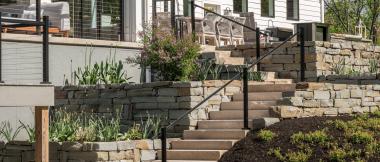
Staircases, terraces, retaining walls, and more can help create the landscaping you want on a sloped lot. If there are staircases to manage steeper grades, make sure you are including railings in your garden path designs.
Having the path zig-zag down a hillside can be another option for a garden path that navigates a steeper slope without using staircases. A zigzag path can also help a garden look and feel wider and more spacious compared to a long, straight garden path that tends to lengthen and narrow.
Steps, terraces, and more are landscaping features that can also be useful for creating multiple levels on other lots as well, not just sloped lots. A small ramp can help create a garden path with multiple levels that is still accessible. Long, wide stairs or terraces can create multiple levels without adding a lot of height if you want to build up that much or don’t need to accommodate much of a slope.
10. Make Sure Drainage is Sufficient
No matter the material or design of your garden paths, it’s important to make sure there is appropriate and sufficient drainage. The last thing you want is for your garden paths to gather standing water during heavy rains or to disrupt the proper drainage of water across your lot without causing soil erosion or damaging your land.
11. Include Lights Along the Garden Path
There are several outdoor lighting options available to make sure you have the exterior lighting you need. Post lights can be popular options for outdoor lights, large and small. You can install larger post lights for lighting that comes from higher up.
You can also choose a style that suits the rest of your home design and garden atmosphere. Hanging lanterns can be popular for a country, farmhouse, or whimsical look and feel. Post lights can also be small and tiny to illuminate the edges of your garden path close to the ground.
These are also often available in solar-powered options, which is helpful for easily lighting pathways further away from your home without having to consider running power to them. Recessed lights are another popular option for outdoor walkway lighting. A wide variety of lighting types and styles are available to help you incorporate outdoor decor trends and create the atmosphere you want.
12. Use Garden Paths and Walkways to Connect Outdoor Living Spaces
If you are planning to include a sitting area in your garden or other outdoor living spaces nearby, consider using garden paths and walkways in complementary styles to connect them. You want to take footpaths and flow into account, and you do want to connect areas in a way that makes sense.
By making sure you include garden path ideas in this, you can give your garden paths a destination and create a focal point in your landscaping design. Well-placed benches can provide a brief sitting area in your garden. You can also create a small sitting area and table off the side or have a gathering area with a fire pit option further away.
If you want a water feature, you can even create a garden maze or labyrinth with a winding garden path that leads to a “secret garden” or a secluded clearing with a fountain or other water feature. This is a Zen garden idea that translates well to other garden designs and styles.
Design and Build Your Custom Home With Custom Home Group
A garden is one of the things to build in your backyard, and garden paths can elevate and enhance your overall landscaping. These are just a few garden path ideas to consider and to inspire you as you think about what you might like for your custom home landscaping.
Working with an experienced, reputable custom home builder can ensure all the things you want are taken into account during design, and that you end up with a custom home you love. If you’re ready to get started on your own custom home in Central Pennsylvania or Northeastern Maryland, contact Custom Home Group. We can help bring your dream home to life!